Travel Guides
How to Book Morocco tour 10 days
20 min read
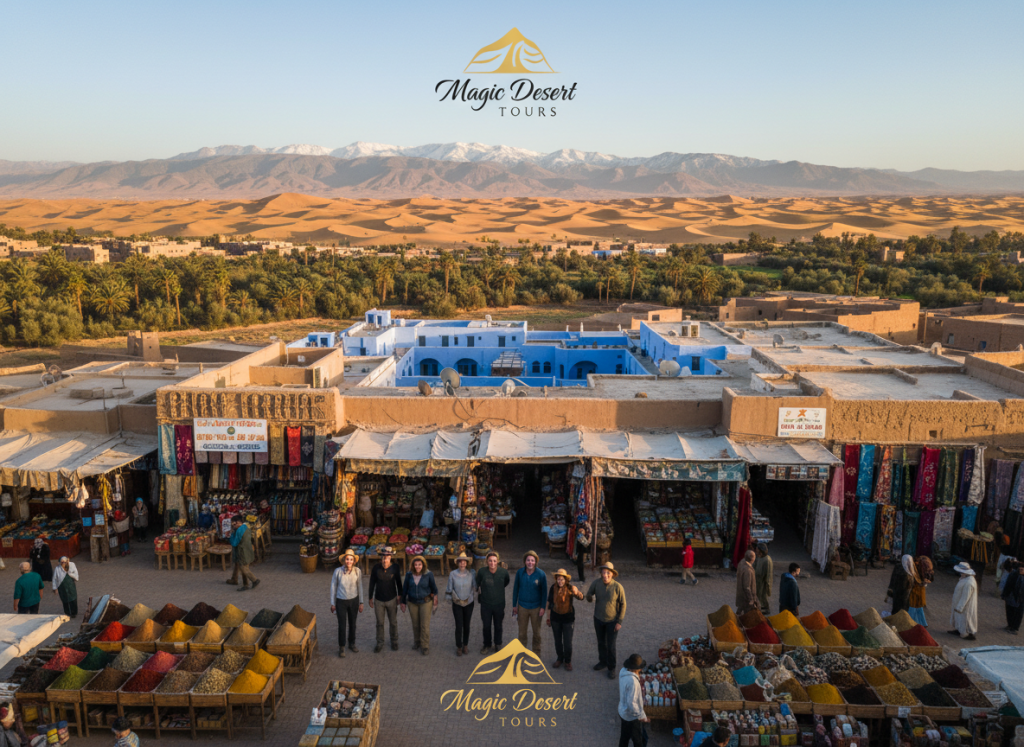
Ever wondered how a single, well-planned route could let you see medinas, a blue city, a Sahara night, and end in a lively marketplace without wasting your precious travel time?
This proven 10-day routing worked for many styles: private guide/driver, group tours, or rental car. You’ll start by deciding what kind of trip fits your comfort and budget, then match it to a realistic itinerary that saves time once you land.
Use a tested framework (Casablanca → Rabat → Chefchaouen → Fès → Merzouga → Ouarzazate → Marrakech) and tweak it for your must-sees. Plan real drive times and smart check-ins so long transfers feel doable.
When you’re ready, follow a clear booking process with Magic Desert Tours. For fast planning from the United States, contact: Ouarzazate, Marrakech, Morocco | WhatsApp: +212 663-359-453 | Email: contact@magicdeserttours.com
Key Takeaways
- Decide your ideal trip style first: private driver, guided tour, or rental car.
- Use the proven itinerary as a baseline and customize it to your interests.
- Build realistic daily drive times to keep each day enjoyable.
- Choose riads in medinas and the right desert camp level for better nights.
- Contact Magic Desert Tours to follow a step-by-step booking process quickly.
Decide what you want from your Morocco trip
Before you book, picture the mood and pace you want. That choice shapes every decision—from the route to the level of support you book.
Choose your travel style
Private tour with driver gives the least stress and local insight when you want comfort. A city guide plus transfers is a middle ground and still saves time.
Rental car offers freedom if you like control, but it adds responsibility for navigation and parking.
Pick your pace
Decide between a compact itinerary (fewer bases, deeper visits) or a “kitchen sink” plan (many stops, more moving). Overstuffed schedules can turn highlights into chores.
Prioritize must-haves
List the places and experiences you value most: medina wandering, historic architecture, local food, and at least one desert night. Protect those days first.
- Protect key nights for the experiences that matter to you.
- Set realistic days per city so you’re not stuck in a car all the time.
| Style | Stress | Freedom | Best for |
|---|---|---|---|
| Private driver | Low | Medium | Comfort and local tips |
| Guide + transfers | Medium | Low | City depth with simple logistics |
| Rental car | High | High | Flexible routes and offbeat places |
Choose the best time of year to travel from the United States
Choosing when to go shapes how much you enjoy both city walking and desert time. For most travelers, spring (April) and fall (October–November) strike the best balance.
Why spring and fall usually feel best for cities and the desert
Spring and fall bring mild daytime temperatures that work across medinas, mountains, and dunes. You’ll avoid extreme heat and crowded peak-season months.
Plan your travel so mornings and late afternoons hold the bulk of outdoor activities. Midday can get warm, so reserve that time for indoor sights or a relaxed meal.
How Sahara desert nights can get cold even when days are warm
The desert warms quickly by day but can turn chilly at night. In open camps the temperature drops fast, so pack warm layers.
- Expect big swings between day and night; bring a warm jacket for camp.
- Higher towns like Chefchaouen feel a bit cooler than Marrakech—choose lodging with heating if needed.
- Use seasonality to decide if you want more city time or more desert nights.
| Season | City comfort | Desert comfort |
|---|---|---|
| Spring (April) | High | High |
| Fall (Oct–Nov) | High | High |
| Summer | Medium | Low (hot days) |
Start with a proven Morocco Tour 10 days itinerary
Start with a clear, proven route so each day feels like progress instead of rush. This sequence groups long drives into logical stretches and turns travel time into part of the experience.
Arrival strategy: Casablanca then Rabat
Arrive in Casablanca and drive ~90 km to Rabat the same day if you want to maximize sightseeing. This avoids extra backtracking and gets you into older cities sooner.
Chefchaouen: blue city and steep streets
Plan Chefchaouen as a highlight stop. The town is hillside, with many stairs and limited car access. Expect to walk luggage from the drop-off point to your riad.
Volubilis, Meknes and Fès medina
Stop at Volubilis (UNESCO) and Meknes en route to Fès. Block a full day in the Fès medina with a local guide. Google Maps often fails in the maze; a guide helps you avoid getting lost.
Long desert transfer and onward route
Treat Fès → Merzouga as a full travel day (~500 km). You may switch to a 4×4 near Arfoud. Plan rest stops so you arrive for the sunset camel ride and your Sahara desert camp night.
- Why this way works: groups long drives, protects key nights, and lets you enjoy riads, lunches, and views without a frantic pace.
- Continue through Todra Canyon and Ouarzazate on the way to Marrakech for a scenic finish with 2–3 days in the city.
| Segment | Approx km | What to expect |
|---|---|---|
| Casablanca → Rabat | 90 | Short drive, city time |
| Rabat → Chefchaouen | 340 | ~5 hours with a stop, steep streets |
| Fès → Merzouga | 500 | All-day transfer, desert camp night |
Decide between the Sahara desert and the Agafay desert
Your choice between sweeping dunes and rocky plains decides the kind of night you’ll remember. Decide first whether your dream desert image is real sand dunes or a desert-style night close to Marrakech.
What Merzouga gives you
Merzouga delivers dramatic sand dunes, a classic sahara desert feel, and a sunset camel ride that frames the horizon. After the ride, the sky goes dark and stars appear like nowhere else. Many travelers call this a once-in-a-lifetime experience.
When Agafay makes sense
If your trip has tight time, choose the agafay desert as a shorter alternative. It’s a stone desert rather than dunes, but it saves long drives and keeps more time in the city. Agafay works well for an overnight or even a long afternoon into night.
- You’ll decide if you want real dunes (Merzouga) or proximity to Marrakech (Agafay).
- Plan for extra travel time to reach Merzouga; many say the true sahara desert feel is worth it.
- Compare camp standards in both deserts—bathrooms, comfort, and meals—so your night matches expectations.
| Feature | Merzouga | Agafay |
|---|---|---|
| Landscape | Sand dunes | Stone plains |
| Drive time | Long (adds time) | Short (close to Marrakech) |
| Best for | True desert experience | Quick desert night |
Plan transportation and realistic drive times between cities
Map your transport before booking hotels; drive time shapes what you can actually see. Long transfers decide which places fit into your itinerary more than simple mileage does.
Typical long-haul days matter. Fès → Merzouga is roughly 500 km and usually takes a full day on curvy roads. Treat it as travel time, not a sightseeing day.
Merzouga → Marrakech can be about 7 hours depending on stops. Plan breaks so you arrive with energy for the next day.
Private transfers vs. multi-day desert tour
Use private transfers when you want a direct, comfortable city-to-city way. Choose a multi-day desert tour if you prefer bundled logistics, remote access, and included lodging.
Self-drive notes
If you rent a car you gain flexibility for photo stops and detours. Roads are marked in Arabic and French, and Marrakech city driving can be hectic.
- There’s no Uber; taxis run inside cities.
- Carry offline maps and a paper plan for remote places.
| Segment | Approx km | Typical hours | Best option |
|---|---|---|---|
| Fès → Merzouga | 500 | Full day (~8–10) | Private transfer or multi-day tour |
| Merzouga → Marrakech | Varies | ~7 | Private transfer or staged drive |
| City driving (Marrakech) | — | Variable | Taxi or local driver recommended |
| Self-drive flexibility | — | Depends on stops | Best for confident drivers |
Choose where you’ll stay: riads, desert camps, and kasbah-style hotels
Picking the right lodging is part of the experience. A well-located riad or kasbah-style hotel turns routine rest into a highlight.
Why a riad inside the medina changes your day
Riads are traditional courtyard homes tucked into the medina. Staying in one puts you within walking distance of shops and sights.
You can return for a midday break, skip taxis, and start early before crowds. Pack a bit lighter since cars often stop some distance away.
What half board usually covers
Half board normally means dinner on arrival and breakfast the next morning. That makes sense in remote places where food options are limited.
It rarely includes lunch or drinks, so plan your food budget accordingly.
How to pick the right desert camp
Compare comfort levels: private bathroom vs. shared, hot water, and heating. These details affect how your desert night feels.
- Look for camp inclusions like sunset camel rides or evening music.
- Check cleanliness, mattress quality, and reviews about service.
- Decide if a basic or luxury camp matches your comfort and budget.
| Lodging type | Best for | Typical inclusions | Notes |
|---|---|---|---|
| Riad (medina) | Authentic city stays | Breakfast, courtyard, local decor | Walking access; light packing advised |
| Kasbah-style hotel | Scenic views and history | Dinner options, rooms with view | Good for staged stops outside towns |
| Desert camp | Desert nights | Half board, camel ride (varies), bedding | Choose private bathroom for more comfort |
Build your day-by-day plan for food, rest, and sightseeing time
A clear daily rhythm—early starts, timed lunches, and late check-ins—keeps your trip comfortable and fun. Use simple rules so you know what to expect each day.
How to pace mornings, lunch stops, and late-afternoon check-ins
Start early on transfer days. Leave at morning light when roads are cooler and you can make good time.
Plan a lunch stop en route. Book a known restaurant or riad garden when possible so you don’t waste time hunting for food.
Arrive late afternoon for check-in. That gives you time to rest before evening wandering or dinner out without feeling rushed.
What to schedule ahead in Marrakech to save time
In busy city spots, book popular rooftops, guided tours, or café reservations in advance. Places like well-known cafés can have waitlists, and booking saves valuable time.
- Schedule guided activities in the morning when attention is highest.
- Use breakfast at your lodging as a buffer before a full day of sightseeing.
- Reserve a recovery window after long transfers to keep the trip enjoyable.
| When | Action | Why | Result |
|---|---|---|---|
| Morning | Guided site visits | Higher focus, cooler time | Better experience |
| Midday | Planned lunch stop | Rest and refuel | Saves time later |
| Late afternoon | Check-in & short rest | Avoids fatigue | Fresh for evening |
| Evening | Rooftop dinner or stroll | Reservations avoid long waits | Relaxed night |
Know what to expect in medinas, souks, and narrow streets
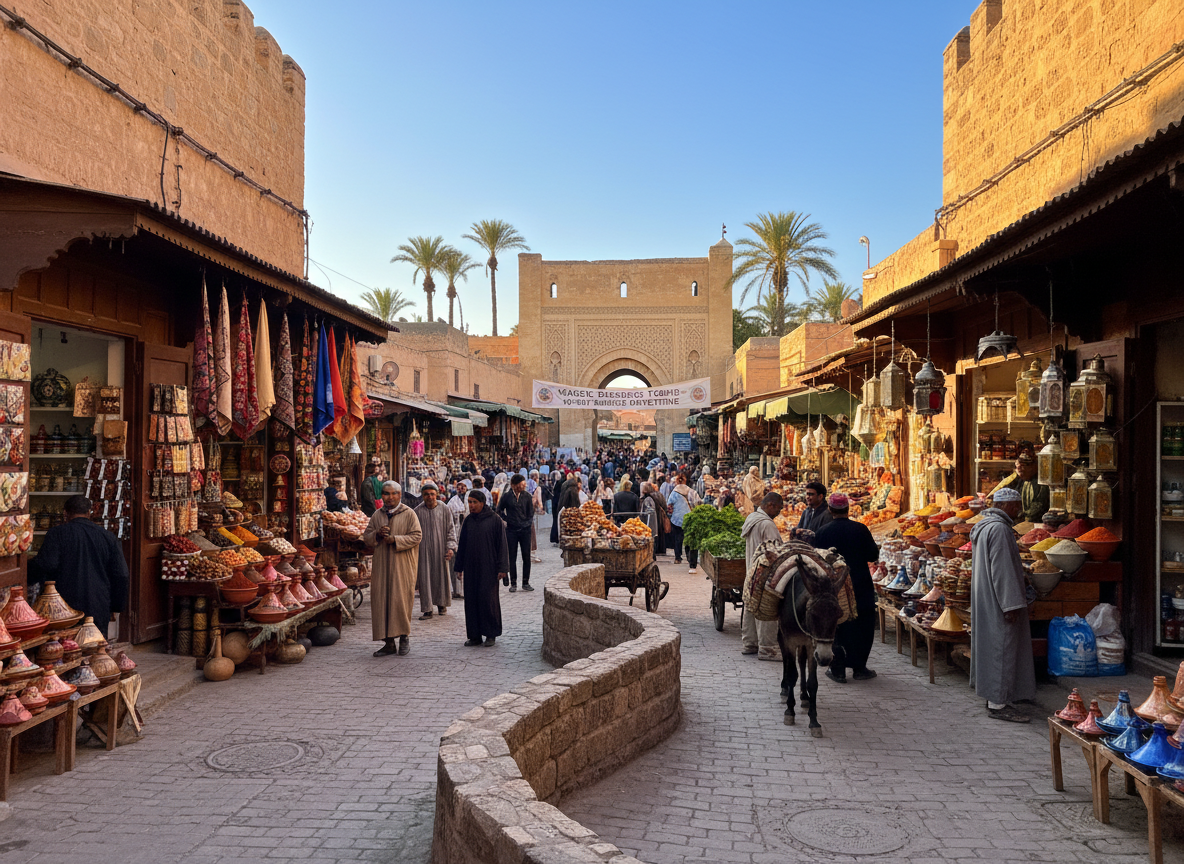
Old medinas are lively mazes where narrow alleys hide surprising corners and local life at every turn.
How to navigate when Google Maps is unreliable
Google Maps can fail inside the old city. Download an offline map app like MAPS.me before you arrive. Pin your riad and a couple of big landmarks so you can reorient quickly if you get lost.
How to handle pushy sellers and “I’ll show you the way” moments
People will often offer to show the way. Decide beforehand if you’ll decline politely or agree to a small tip up front.
- You’ll expect the medina to feel maze-like, with sudden turns and narrow streets.
- Pin your riad, mark one main street, and keep those anchors in mind.
- If someone steers you toward shops, thank them and keep walking to avoid pressure.
- Treat getting a bit turned around as part of travel, but keep boundaries and stay safe.
| Situation | Quick action | Result |
|---|---|---|
| Map fails | Use offline app | Save time and stress |
| Guide offers help | Set tip upfront | Avoid conflict |
| Pushy seller | Keep walking | Less attention |
Decide when you need a local guide
Local guides often unlock stories and shortcuts that maps simply cannot show. They save you time and give context that turns a walk into an experience you’ll remember.
Why a guide shines in Fès medina and historic sites
You should hire a guide in the Fès medina. The maze-like lanes make it easy to get lost and miss key artisan quarters like the tanneries. A guide explains history, points out hidden doors, and keeps your visit efficient.
When you can explore solo in Marrakech
Marrakech has stronger tourist infrastructure, so you can often move at your own pace without losing too much time. Use a targeted tour for food walks or specific monuments when you want deeper storytelling without committing the whole day.
- Decide by navigation difficulty and how much context you’ll miss.
- Prioritize guided tours in labyrinthine medina areas and at historic sites like Volubilis.
- Choose short, focused guides in city spots when you want structured insight.
| Place | Navigation | When to hire |
|---|---|---|
| Fès medina | High difficulty | Full guide or half-day tour |
| Marrakech (city) | Low–medium | Optional targeted tour |
| Historic sites (Volubilis) | Low | Guide for context and stories |
Set a realistic budget for your tour, stays, and experiences
A simple budget separates fixed costs from flexible spending so you won’t be surprised mid-trip. Start by listing lodging, transfers, and guided services as fixed items.
What tends to be affordable
Riads, meals, and local taxis
Comfortable riads in Fès or Marrakech often run under $200 per night. Lunches in casual spots can be under $5, and local taxis keep short city rides cheap.
Where costs climb
Marrakech hotspots and upgraded desert camps
Marrakech restaurants and rooftop cafés can push prices up. Upgraded desert camp options cost more but may bundle transfers, meals, and activities — which can lower other expenses.
- Separate “fixed” (lodging, transfers, tour fees) from “variable” (shopping, taxis, tips).
- Plan extra for Marrakech and for luxury camp upgrades.
- Set cash aside for small purchases; many small vendors don’t accept cards.
| Item | Typical cost | Why it matters |
|---|---|---|
| Riad / riads | $50–$500/night | Comfort vs. location trade-off |
| City restaurants | $5–$30 per meal | Tourist spots cost more |
| Desert camp | $40–$500+ per night | Tiered comfort and inclusions |
Factor how many people are in your group and how much time you’ll spend in each place. That makes your budget realistic and helps you enjoy the trip without surprises.
Prepare the practical travel basics before you book
Get simple essentials sorted now so money, language, and connectivity won’t eat your time later. These steps make the whole country portion of your trip smoother.
Currency and cash plan
Expect to use the Moroccan dirham for most purchases. Cash is common in souks and for tipping; many people prefer to pay in cash for small buys.
Carry a backup way to access funds. Some street ATMs reject cards, so keep an exchange bureau or a secondary card as a fallback.
Language expectations
Arabic and French are most common. You’ll find English in hotels, guided tours, and major tourist spots in the city.
Connectivity options
Choose a local SIM (Maroc Telecom, Inwi, Orange) for calls and steady data. Or buy an eSIM like Airalo for quick setup and maps.
- Cash plan: set how much dirham to start with for souks and tips.
- Money fallback: carry an exchange bureau option or backup card.
- Connectivity: SIM for calls, eSIM for data, and always download offline maps.
| Option | Best for | Notes |
|---|---|---|
| Local SIM | Long trips and calls | Reliable local rates, needs SIM slot |
| eSIM | Shorter stays, quick setup | No physical SIM, instant data |
| Offline maps | Remote travel | Saves battery and avoids roaming |
Do these checks before you book and your trip will start the right way.
Pack for comfort across cities, mountains, and the desert
Bring flexible layers so sudden temperature swings—like a chilly mountain morning or a desert night—won’t slow you down.
Chefchaouen sits a bit higher, so mornings can feel cool even when the city warms up by midday. Nights in the sand can drop fast, so a warm top is worth the space in your bag.
Layering for altitude and cold nights
Warm layers and practical gear
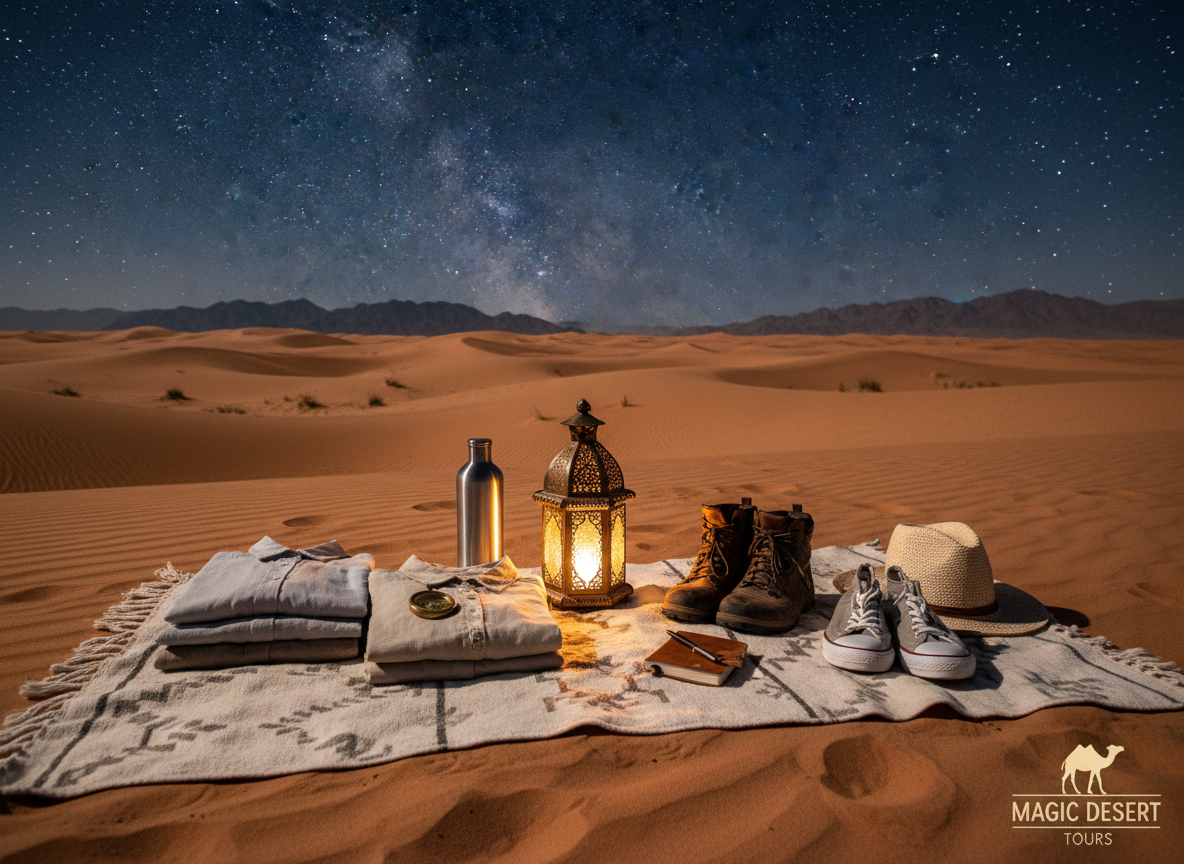
Pack a light insulated top and a windproof shell. Add a scarf that protects against dust and a small day bag for walks. One warm top covers camp and early starts, even if daytime feels hot.
Modest, breathable outfits
Dress for comfort and respect
Choose loose, breathable fabrics that blend with local norms. This lets you visit markets and restaurants without feeling out of place. Comfortable walking shoes matter—many alleys are uneven and hillside places need steps.
- Layers for mountain-to-desert shifts.
- A warm top for camp and cool mornings.
- Modest, breathable clothing for medinas and restaurants.
- Sturdy walking shoes and a small day bag.
| Item | Why it helps | When to use |
|---|---|---|
| Light insulated top | Keeps you warm at camp | Evenings and early mornings |
| Breathable layers | Cool in sun, modest in medinas | Daytime city walks |
| Sturdy shoes | Traction on uneven streets | All walking tours |
| Scarf & day bag | Wind, dust, and hands-free comfort | Long drives and market visits |
Book the experiences that make the trip unforgettable
Book the right extras so long drives become memory-making moments, not chores. Decide early which high-impact experiences you’ll reserve and which you’ll book on arrival.
Desert add-ons
Many desert camps offer ATV rides, sandboarding, and longer camel treks. Pick one or two activities to avoid overloading your energy on long transfer hours.
Signature stops to stack on a transfer
- Use the drive to include Todra Canyon and Atlas viewpoints as natural break points.
- Add Aït Benhaddou if your route allows — it often felt like stepping onto a movie set.
Prioritize the core experience: a sunset camel ride on the dunes, then a quiet stargazing walk beyond camp lights. That moment often defines the whole trip.
| What | Why | Timing |
|---|---|---|
| ATV or sandboarding | Adrenaline and photos | Book by weather, on arrival |
| Todra Canyon | Scenic stop | Short stop (1–2 hours) |
| Aït Benhaddou | Iconic view | Plan into itinerary |
Finally, avoid turning every stop into a rushed day trip. Choose a few places to savor so your overall experience stays rich and relaxed.
How to book your tour with Magic Desert Tours
Send your travel dates, preferred starting city, and must-see destinations so we can craft an itinerary that fits your priorities.
Message us with dates, start city, and must-see destinations
You’ll start by messaging Magic Desert Tours with exact dates, your starting city (often Casablanca or Marrakech), and the destinations you won’t skip. This helps us build a trip that matches your time and interests.
Confirm itinerary, accommodations, and transport
We’ll propose a day-by-day itinerary and options for riads, kasbah hotels, and desert camps. You’ll confirm whether you want a private car and driver, city guides, or a hybrid plan.
Review what’s included: nights, meals, guides, and transfers
Double-check inclusions before you finalize. That means nights, half board or meals, guides in medinas, transfers, and any special experiences like camel rides.
Finalize booking and receive travel details
Once you agree, we’ll finalize your booking and send pickup times, meeting points, and a clear travel schedule so you arrive organized instead of scrambling.
- You’ll confirm how many days you’ll spend in each city and whether to add extra nights or activities.
- You’ll review inclusions and exclusions so there are no surprises about tickets, lunches, or optional things.
- You’ll receive your full travel details, including contact points and the day-by-day flow.
| Step | What you do | What we send |
|---|---|---|
| 1 | Message dates, start city, destinations | Draft itinerary |
| 2 | Choose car/guide options and lodging level | Price breakdown and timing |
| 3 | Confirm inclusions and finalize booking | Pickup times and travel documents |
Contact: Ouarzazate, Marrakech, Morocco | WhatsApp: +212 663-359-453 | Email: contact@magicdeserttours.com
Contact details for planning and reservations
Simple contact steps get you from a rough plan to a confirmed itinerary. Use the direct details below to save time and find the fastest way to book your trip.
Address
Ouarzazate, Marrakech, Morocco
Chat with us on WhatsApp
+212 663-359-453
contact@magicdeserttours.com
- Use these contacts to plan the fastest way, especially if you’re booking from the United States and need quick answers on dates, routes, and inclusions.
- Message the WhatsApp number for real-time planning when you compare options for city starts, desert routing, and timing.
- Email if you want a written record of the itinerary and inclusions — useful when coordinating with other people on your trip.
- Share key details up front: number of travelers, comfort level, preferred riad style, and must-see cities to reduce back-and-forth.
- Confirm special needs (mobility, dietary requests) so the plan matches your reality on the ground.
| Contact method | Best use | Typical response time |
|---|---|---|
| Real-time questions, timing, quick changes | Minutes–hours | |
| Written itinerary, confirmations, attachments | Hours–1 business day | |
| Address visit | In-person meetings, local pick-up planning | By appointment |
Conclusion
Close your plan by choosing pace and priorities so the itinerary fits how you want to spend each day. Pick the few places that matter and protect time in every city.
Keep it practical: decide where a guide helps (medina mazes), where you can roam solo, and which desert night or riad stay is non-negotiable. Use packing, budget, and transport tips to make logistics smooth.
Treat this post as a planning checklist: choose route, lock accommodations, then finalize experiences and bookings. When you’re ready, contact Magic Desert Tours at Ouarzazate, Marrakech, Morocco | WhatsApp: +212 663-359-453 | Email: contact@magicdeserttours.com.
FAQ
How do I book a 10-day Morocco tour with Magic Desert Tours?
Message Magic Desert Tours with your travel dates, starting city, and must-see destinations. The team will propose an itinerary, confirm accommodations and transport, and send a booking confirmation with payment and arrival details.
How should I decide what I want from my trip?
Start by choosing your travel style—private tour with a driver-guide, a guide plus driver, or self-drive. Pick a pace: a compact route or a full “kitchen sink” itinerary. Prioritize medinas, architecture, food, desert nights, or coastal stops so your planner focuses on what matters most to you.
When is the best time to travel from the United States?
Spring and fall usually feel best for both cities and the desert because temperatures are milder. Winter brings cold desert nights, and summer can be very hot for long drives and medina exploration.
Do desert nights get cold even if days are warm?
Yes. Sahara nights can drop sharply after sunset, sometimes becoming quite chilly. Bring warm layers and a hat for overnight camps, even if daytime temps are pleasant.
What does a proven 10-day itinerary look like?
A strong route often starts in Casablanca, moves to Rabat, then Chefchaouen, Volubilis and Meknes en route to Fès. Expect a medina day in Fès, a long transfer toward Merzouga for a Sahara camp night, then the Road of a Thousand Kasbahs, Todra Canyon, Ouarzazate, and finish with several days in Marrakech’s medina and monuments.
Should I choose the Sahara or Agafay desert?
Choose Merzouga in the Sahara for large dunes, sunset camel rides, and spectacular starry skies. Agafay near Marrakech is a rocky, close alternative if you want a shorter desert experience without the long drive to the Sahara.
How long are typical drive times between major stops?
Some days are long—Fès to Merzouga and Merzouga to Marrakech can be full travel days of several hours. Plan rest stops and consider breaking long legs with overnight stays to avoid fatigue.
When should I use a private transfer vs. a multi-day desert tour?
Use private transfers if you prefer flexibility and direct routing. Book a multi-day desert tour when you want a bundled experience with a guide, accommodations, and activities already arranged.
What should I know if I rent a car?
Expect varied road conditions, signage mostly in Arabic and French, and busy city driving. Avoid medina centers (park outside) and make sure your rental includes insurance and GPS or a reliable eSIM for navigation.
Where should I stay: riads, desert camps, or kasbah hotels?
Staying in a riad inside a medina gives a quieter, authentic feel and easy access to alleyways and souks. Desert camps range from basic to luxury—check comfort level, bathroom arrangements, and which meals are included. Kasbah-style hotels offer scenic views and historic character.
What does “half board” usually include?
Half board generally covers breakfast and dinner. It’s common for remote riads and desert camps, where lunch may be on the road or at local restaurants during your daily stops.
How should I build my day-by-day plan for food and sightseeing?
Pace mornings for major sites, schedule lunch stops during transfers, and leave late afternoons free for check-ins or relaxed souk visits. Book key Marrakech attractions ahead to save time and avoid long lines.
How can I navigate medinas and narrow streets when Google Maps fails?
Use a local guide or the riad’s directions, download offline maps, and carry printed directions with landmarks. Ask shopkeepers for simple directions—locals know the medina layout and will point you the right way.
How do I handle pushy sellers and “I’ll show you the way” offers?
Stay polite but firm—say “no, thank you” and walk away. If someone insists on guiding, confirm the cost first or return to your riad for assistance. Trusted guides from your riad reduce these encounters.
When do I need a local guide?
You’ll benefit from a guide in Fès medina, ancient tanneries, and complex historical sites where local context adds value. In Marrakech, you can explore many areas solo, but a guide helps skip lines and find hidden courtyards.
What’s a realistic budget for accommodation and experiences?
Riads, local meals, and taxis are generally affordable. Costs rise for Marrakech hotspots, luxury riads, and upgraded desert camps or private transfers. Set a budget for nights, meals, guides, and optional activities like ATV rides.
What practical travel basics should I prepare before booking?
Plan currency and cash needs (Moroccan dirham), locate ATMs, and know exchange bureau options. Expect Arabic and French first—English is common in tourism hubs. Decide between a local SIM or eSIM for reliable connectivity.
How should I pack for varied climates across cities, mountains, and the desert?
Layering is key for altitude changes and cold desert nights. Pack modest, breathable clothes for medinas and restaurants, a warm jacket for camps, comfortable walking shoes, and sun protection for daytime drives.
What memorable add-ons should I book?
Consider ATV rides, sandboarding, or longer camel treks in the desert. Signature stops include Aït Benhaddou, Todra Canyon, and Atlas viewpoints—book guided excursions for safety and local insight.
How do I finalize a booking with Magic Desert Tours?
Message your travel dates and start city, review the proposed itinerary and inclusions, confirm accommodations and transport, then finalize payment. You’ll receive a detailed travel pack with daily plans and contact info.
How can I contact Magic Desert Tours for planning and reservations?
Visit the office in Ouarzazate or Marrakech, chat on WhatsApp at +212 663-359-453, or email contact@magicdeserttours.com for fast responses and personalized planning.