Travel Guides
Moroccan Traditional Clothing
7 min read
Moroccan Traditional Clothing: A Complete Guide
Moroccan Traditional Clothing is a beautiful reflection of the country’s rich history, diverse cultures, and exceptional craftsmanship. From the iconic Djellaba and elegant Kaftan to the luxurious Takchita and colorful Amazigh attire, each garment tells a story of tradition and identity. Influenced by Amazigh, Arab, Andalusian, Saharan, and Mediterranean cultures, Morocco’s traditional clothing has evolved over centuries while preserving its authenticity. Whether you’re planning a trip to Morocco, interested in its cultural heritage, or looking to purchase authentic handmade garments, this comprehensive guide explores everything you need to know about Moroccan Traditional Clothing, its history, regional variations, cultural significance, and the timeless artistry that makes it admired around the world.
Introduction to Moroccan Traditional Clothing

Moroccan Traditional Clothing is one of the most fascinating aspects of Morocco’s rich cultural heritage. Every garment tells a story that stretches back centuries, reflecting the country’s unique position at the crossroads of Africa, Europe, and the Middle East. Influenced by Amazigh (Berber), Arab, Andalusian, Saharan, Jewish, and Mediterranean traditions, Moroccan fashion has evolved into a remarkable blend of elegance, practicality, and craftsmanship.
Whether you are exploring the lively souks of Marrakech, wandering through the ancient medina of Fes, admiring the blue streets of Chefchaouen, or experiencing the golden dunes of the Sahara Desert, you will notice that traditional clothing remains an important part of everyday life. Unlike many countries where traditional dress is worn only during festivals, Morocco proudly preserves its clothing traditions for daily activities, religious gatherings, weddings, and national celebrations.
For travelers, learning about Moroccan Traditional Clothing provides a deeper appreciation of the country’s culture. Every embroidered Kaftan, handcrafted Djellaba, and colorful Amazigh garment reflects generations of knowledge passed from one artisan to another. These garments are not simply pieces of fabric; they are expressions of history, identity, family traditions, and regional pride.
Today, Moroccan fashion has gained worldwide recognition. Designers regularly showcase Moroccan Kaftans and traditional craftsmanship on international runways while continuing to preserve techniques that have remained largely unchanged for hundreds of years. Visitors to Morocco often purchase traditional garments as meaningful souvenirs that represent both the country’s artistic excellence and its welcoming spirit.
The Rich History of Moroccan Traditional Clothing

The story of Moroccan Traditional Clothing begins long before the formation of the modern Moroccan state. For thousands of years, the people living in North Africa developed clothing that responded to the country’s diverse geography, ranging from snow-covered mountains to vast desert landscapes. Early Amazigh communities created practical garments using locally produced wool, leather, and natural fibers, ensuring protection against both harsh winters and intense summer heat.
As Morocco became an important center of trade during the eighth century, new materials began arriving through trans-Saharan caravans and Mediterranean ports. Merchants introduced silk, fine cotton, velvet, linen, and luxurious brocade from regions such as Persia, Egypt, and the eastern Mediterranean. Moroccan artisans quickly adopted these materials while developing distinctive weaving and embroidery techniques that remain highly respected today.
The influence of Al-Andalus profoundly transformed Moroccan fashion. Following the migration of Andalusian families into cities including Fes, Tetouan, Chefchaouen, and Rabat, highly skilled craftsmen introduced sophisticated embroidery patterns, elegant tailoring methods, and refined textile production. Many of the decorative details seen on modern Kaftans and ceremonial garments can trace their origins to this remarkable cultural exchange.
Over the centuries, Morocco’s ruling dynasties—including the Almoravids, Almohads, Marinids, Saadians, and Alaouites—supported local artisans by encouraging the production of luxurious textiles for royal courts and important ceremonies. As a result, traditional clothing became not only functional but also a symbol of prestige, social status, and artistic excellence.
Despite rapid modernization during the twentieth and twenty-first centuries, Morocco has successfully preserved its traditional clothing. Today, local designers combine ancient craftsmanship with contemporary fashion, allowing younger generations to wear traditional garments with modern elegance while honoring their cultural roots.
Why Moroccan Traditional Clothing Is Still Worn Today

One of the most remarkable aspects of Moroccan culture is that traditional clothing remains part of everyday life. In many parts of the country, it is perfectly normal to see people wearing Djellabas while shopping in the local market, visiting neighbors, or attending Friday prayers. During religious holidays such as Eid, entire families proudly wear their finest traditional garments, creating colorful celebrations filled with elegance and tradition.
Traditional clothing also plays an important role during weddings, engagements, and family ceremonies. Brides often wear several beautifully embroidered outfits throughout the celebration, while men choose elegant Djellabas or Jabadors for important occasions. These garments symbolize respect for family traditions and demonstrate the importance of preserving Morocco’s cultural identity.
Another reason for the continued popularity of Moroccan Traditional Clothing is its practicality. Loose-fitting garments allow excellent air circulation during the hot summer months while providing warmth during cool evenings and mountain winters. The pointed hood of the Djellaba protects against sunshine, rain, and wind, making it one of the most functional garments ever created.
The continued demand for traditional clothing also supports thousands of skilled Moroccan artisans. Tailors, embroiderers, leatherworkers, weavers, and textile merchants rely on these traditions for their livelihoods. By purchasing authentic handmade clothing, visitors contribute directly to preserving centuries-old craftsmanship while supporting local communities.
The Djellaba: Morocco’s Most Iconic Traditional Garment

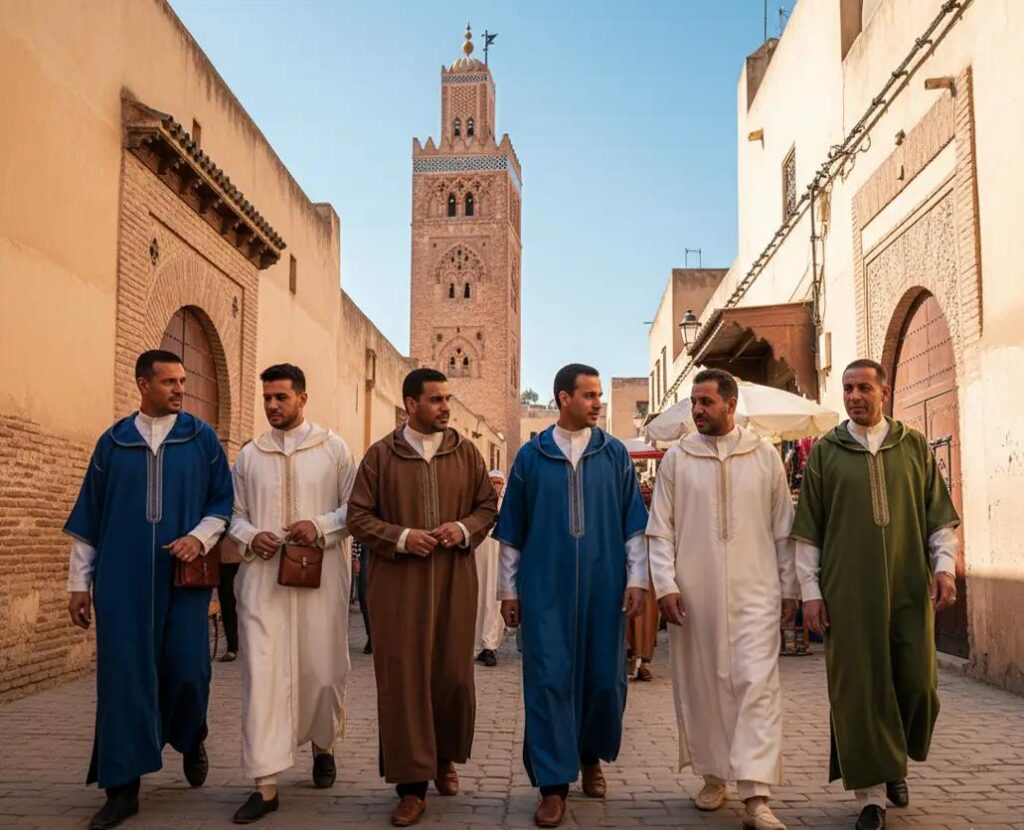
Among all examples of Moroccan Traditional Clothing, the Djellaba is undoubtedly the most recognizable. Instantly identified by its long flowing design and pointed hood, the Djellaba has become a symbol of Morocco itself. Both men and women wear Djellabas, although styles, fabrics, and decorative details often differ depending on gender, region, and occasion.
The origins of the Djellaba date back many centuries when practical clothing was essential for surviving Morocco’s varied climate. The loose shape allows air to circulate freely, helping the wearer stay cool during hot days. At the same time, the garment provides insulation during colder weather, especially when made from thick wool. The pointed hood, known locally as the Qob, offers protection from intense sunlight, strong winds, and occasional rain, making it especially useful for travelers and shepherds.
In cities such as Marrakech, Fes, Meknes, and Rabat, Djellabas are worn throughout the year. Lightweight cotton and linen versions are common during spring and summer, while heavier wool garments dominate during autumn and winter. Artisans often produce handmade Djellabas using locally woven fabrics, and many families continue to visit traditional tailors to have garments custom-made.
Today, contemporary Moroccan designers have introduced modern colors, refined cuts, and fashionable embroidery while respecting the timeless silhouette of the traditional Djellaba. As a result, younger generations continue wearing this iconic garment with pride, blending heritage with modern style.
The Symbolism Behind the Djellaba

Although the Djellaba is admired for its practicality, it also carries deep cultural meaning. For many Moroccans, wearing a Djellaba expresses respect for tradition, modesty, and family values. It is often chosen for Friday prayers, religious celebrations, and important community events, reflecting both elegance and humility.
Regional differences can be seen in colors, fabrics, and decorative stitching. Mountain communities often prefer natural wool shades that provide warmth, while coastal cities feature lighter fabrics suitable for Mediterranean climates. In southern Morocco, breathable cotton Djellabas are particularly popular because they help people stay comfortable in high temperatures.
The craftsmanship involved in producing a high-quality Djellaba is remarkable. Skilled tailors carefully measure each customer before cutting and sewing every piece by hand. Decorative embroidery around the neckline, sleeves, and chest requires years of experience, and premium garments may take several days to complete. This attention to detail is one reason why authentic Moroccan clothing continues to be valued by both locals and visitors.
Final Thoughts
Moroccan Traditional Clothing is a timeless expression of the country’s rich heritage, skilled craftsmanship, and cultural diversity. From the iconic Djellaba and elegant Kaftan to colorful Amazigh attire, each garment tells a unique story of Morocco’s traditions and identity.
Whether you’re visiting the bustling souks of Marrakech, exploring the ancient medinas of Fes, or traveling across the Sahara Desert, experiencing traditional clothing offers a deeper connection to Moroccan culture. With Magic Desert Tours, you can discover these traditions firsthand while supporting local artisans and bringing home an authentic piece of Morocco’s remarkable heritage.