Travel Guides
Morocco Desert Tour – Must-Have Items to Pack
18 min read
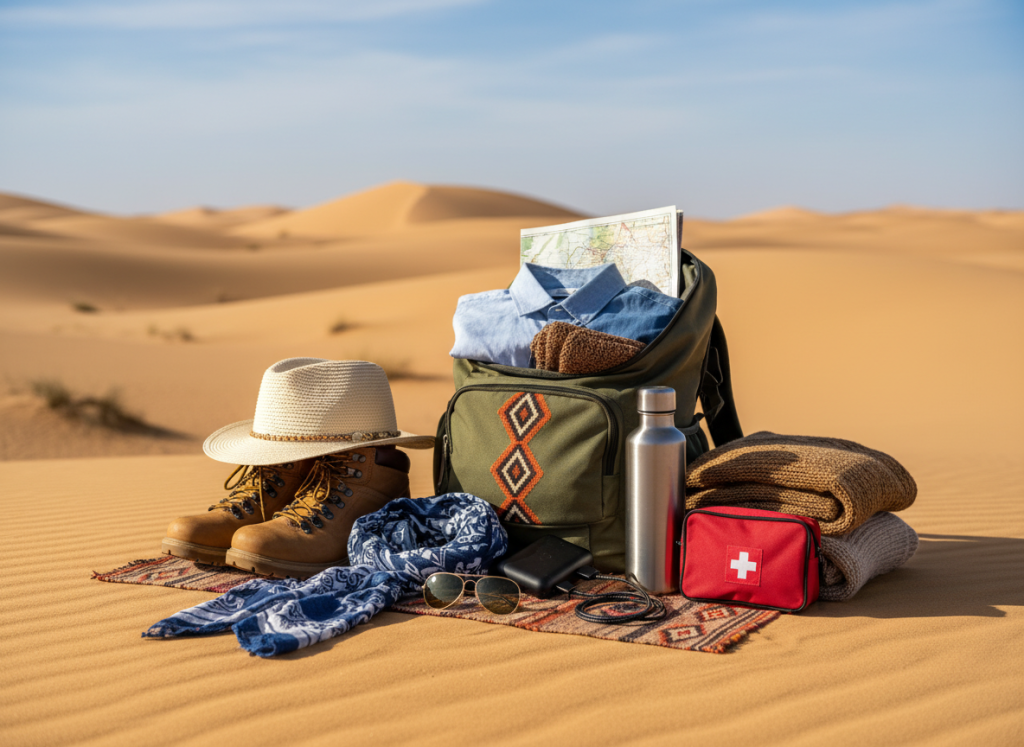
A Morocco Desert Tour is an unforgettable way to experience the Sahara, but packing the right items can make a big difference. The desert brings extreme temperatures, strong sunlight, sand, and cool nights, so preparation is essential.
Knowing what to pack for a Morocco Desert Tour helps you stay comfortable while exploring golden dunes, riding camels, and spending a night under the stars. Your Morocco Sahara packing list should include sun protection, lightweight clothing, sturdy footwear, enough water, personal care items, and protection for your electronics.
Whether you are joining a short Morocco Desert Tour from Marrakech or a longer journey from Fes, packing light and choosing versatile items will make your experience easier.
This guide covers the essential items for a Morocco Desert Tour, from clothing and footwear to photography equipment, medical supplies, camping gear, and cultural considerations.
Key Takeaways
- Pack breathable layers to handle temperature swings from over 100°F during the day to near 40°F at night.
- Bring SPF 50+ sunscreen, a wide-brimmed hat, and UV-blocking sunglasses for full sun protection.
- Carry at least 3 liters of water capacity and sand-proof bags for your electronics.
- Choose sturdy hiking boots for camel trekking and comfortable sandals for camp downtime.
- Wear modest clothing that respects Moroccan culture, especially when visiting local Berber communities.
- Build your morocco sahara packing list around lightweight, multi-purpose items to keep your bag manageable.
What to Pack for Morocco Desert Tour
Planning what to bring to Moroccan desert trips can be daunting. The trick is to pack light but smart. Most tour operators, like Sahara Desert Trips, offer detailed packing guides. They suggest focusing on multi-purpose items that can be used in more than one way.
Creating Your Ultimate Desert Packing Checklist
Organize your desert tour essentials into three easy groups:
- Must-haves: sun protection, water bottles, medication, comfy shoes, and layers
- Comfort items: a travel pillow, wet wipes, a portable charger, and a headlamp
- Optional extras: a journal, binoculars, or a portable speaker for camp nights
This approach helps you focus on what’s really important. Leave the rest behind at your hotel in Marrakech or Fes.
Weight Restrictions for Desert Transportation
Desert tour vehicles, like 4×4 Toyota Land Cruisers, have limited trunk space. Most operators let you bring about 15 to 20 kilograms per person. That’s around 33 to 44 pounds. Remember this when deciding what to bring, especially if you’re sharing transport.
Choosing Between a Backpack and Suitcase
A backpack is the best choice for the Sahara. Suitcases don’t work well on sand dunes or during camel rides. Opt for a 40 to 50-liter backpack with straps and a rain cover. It’s flexible and keeps your hands free for sandy terrain.
Now that you’ve got your packing sorted, it’s time to pick the right clothes for the desert’s extreme temperatures.
Essential Clothing for the Sahara Desert Climate
Dressing for the Sahara is a challenge. Daytime temperatures can hit over 120°F in summer. But nights can drop below freezing, especially from November to February. The right clothes will keep you comfy all day and night, no matter the season.
Layering Strategies for Temperature Extremes
Layering is key in the desert. Here’s how to build your outfit:
- Base layers (3–4 pieces): Wear lightweight, long-sleeved shirts and pants that fit close to your skin.
- Mid-layers (2 pieces): Use a fleece jacket or packable down vest for cool mornings and evenings.
- Outer shell (1 piece): A windbreaker protects you from sandstorms after sunset.
- Thermal underwear: Essential for winter tours when it gets very cold at night.
This guide lets you adjust your layers as the day changes.
Choosing Breathable Fabrics and Materials
What you wear matters a lot. Choose merino wool, linen, or synthetic fabrics that wick away sweat. Avoid cotton because it holds moisture and can make you cold. Wear light colors like beige, white, and khaki to stay cool.
Traditional Moroccan Attire vs. Western Clothing
A traditional Moroccan djellaba is great for sun protection and airflow. Many travelers buy one at local markets. It’s also a way to show respect for the culture. Women should bring a lightweight scarf for visiting Berber villages. Mixing Western clothes with local attire is a good idea.
Sun Protection Gear for Your Desert Adventure
The Sahara Desert is tough on skin without protection. UV levels often hit 11, which is extreme according to the World Health Organization. Make sure sun protection is at the top of your desert safari packing list for Morocco.
Begin with a broad-spectrum SPF 50+ sunscreen. Carry at least 200ml, as you’ll need to reapply every two hours. Sand can increase UV exposure by about 25%, especially near Erg Chebbi’s tall dunes. Also, pack an SPF 30 lip balm and after-sun aloe vera gel for soothing your skin at night.
Here are the essential sun protection items for your Morocco camel trek:
- A wide-brimmed hat or a traditional cheche (the Tuareg-style turban that wraps around your head and neck)
- UV400 polarized sunglasses with side shields to block glare from every angle
- A lightweight neck gaiter or buff for extra coverage
- Sun-protective gloves for long camel rides
The cheche is a great choice because it covers your face, neck, and ears. You can find them in Merzouga and Zagora for a few dollars. Many travelers like it over a hat because it stays in place in the desert wind.
Make sure your sunscreen is easy to reach. A small dry bag or ziplock pouch on your daypack is perfect. Your skin will be grateful after a day in the Saharan sun. And you’ll be ready for the next part of your journey with the right shoes.
Footwear Selection for Desert Terrain
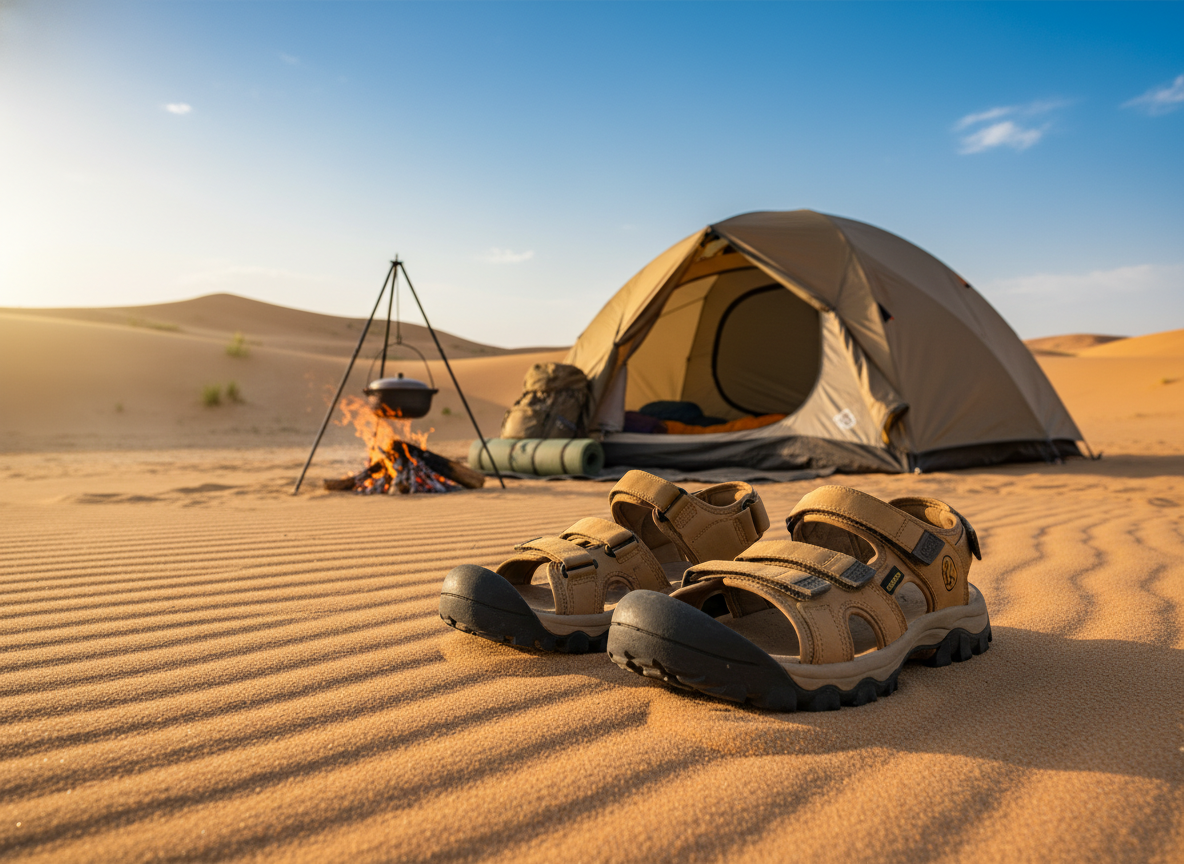
Your feet carry you through every moment of your Sahara adventure. Choosing the right shoes is key for a good trip. You’ll walk on rocky paths, soft sand dunes, and uneven ground. So, it’s wise to bring at least two pairs of shoes.
Closed-Toe Shoes for Camel Trekking
Sturdy hiking boots with ankle support are essential for desert travel. Look for brands like Merrell and Salomon for reliable options. They help keep your ankles stable when getting on and off camels.
Lightweight trail runners are okay for easier tours. But boots protect your feet better on rocky ground near places like Erg Chigaga.
Remember to pack moisture-wicking socks made from merino wool. They keep your feet cool and prevent blisters. Also, include blister prevention tape in your morocco desert camping gear. Your feet will appreciate it after long walks.
Sandals for Camp Relaxation
After reaching camp, your feet need a break. Choose quality sport sandals from Teva or Chaco for walking on sand. They provide a good grip and stay securely on your feet. Avoid flip-flops at all costs. Scorpions are active at night in desert regions, and open footwear puts you at risk.
Breaking in Your Desert Boots
New boots and blisters are common. Wear your boots for at least 20 miles before your trip. This helps prevent painful blisters that could ruin your adventure.
For extra foot protection, consider lightweight gaiters. They keep sand out of your boots during windstorms. Gaiters are often overlooked but make a big difference on the dunes.
Photography Equipment and Electronics
The Sahara Desert is a paradise for photographers. Imagine capturing golden dunes at sunrise, star-filled skies, and camel caravans. Make sure your electronics are on your morocco sahara packing list to capture these moments.
Sand is a big problem for cameras. Keep your gear safe in sealed bags or dry bags. A lens cleaning kit is essential to remove Sahara dust. Use a waterproof phone pouch for sandstorms.
Nights in the desert can quickly drain batteries. Plan for this by packing extra batteries and a portable power bank. Here’s what you need:
- At least two extra camera batteries stored in warm inner pockets
- A portable power bank rated at 20,000mAh or higher
- A foldable solar charger — the Sahara gets consistent, strong sunshine
- Memory cards totaling 64GB or more for high-resolution photos and video
A GoPro is a great addition. Use it for smooth footage during camel treks or for night sky time-lapses near Merzouga.
Download offline maps before leaving your hotel. Cell service is weak in the desert. Offline maps ensure you stay on track.
Pro tip: Store all electronics in a dry bag inside your pack. This keeps them safe from sand.
Hydration and Water Storage Solutions
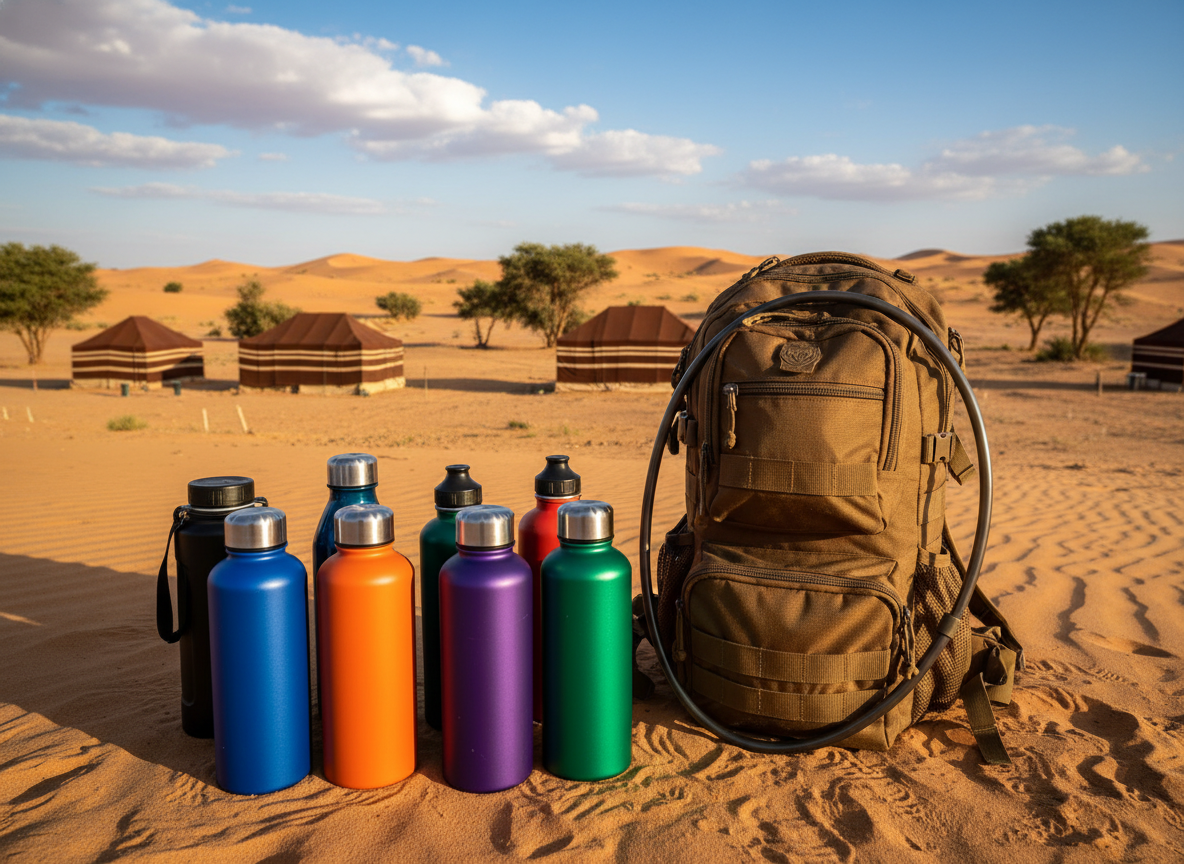
Staying hydrated is key when exploring Morocco’s desert. The Sahara’s dry heat can quickly dehydrate you. Without enough water, you might get headaches, feel tired, or even get heat exhaustion.
Calculating Your Daily Water Needs
Drink at least 3 to 4 liters of water a day in the desert. In summer, you might need 5 liters. Use bottles with time markers to keep track of your water intake.
Avoid alcohol, as it makes dehydration worse in hot climates. Add electrolyte tablets from brands like Nuun or GU to your water. These tablets help replace lost minerals through sweat.
Insulated Bottles vs. Hydration Packs
Choosing the right water container is important for desert trips. Insulated bottles from Hydro Flask or Yeti keep water cool for up to 24 hours. This is great for staying hydrated under the sun.
CamelBak hydration packs are convenient but might freeze in cold desert nights. It’s best to have both:
- Insulated bottles for daytime use
- Hydration packs for camel treks and long walks
- A collapsible water container as a backup
Water Purification Options
Most good tour companies provide safe bottled water. Still, it’s wise to bring water purification tablets as a backup. These tablets are small, light, and can purify water quickly.
With the right hydration gear, you’ll be set for a great Sahara adventure. Don’t forget your camera and other essentials.
Personal Care and Hygiene Essentials
Staying fresh in the Sahara requires some planning. Desert camps have limited facilities, and water is scarce. Any merzouga desert packing guide will tell you that smart toiletry choices are key to your comfort.
Eco-Friendly Toiletries for Desert Camping
The Sahara ecosystem is delicate, so using eco-friendly products is important. Brands like Sea to Summit offer biodegradable soap sheets that dissolve quickly and leave no trace. Make sure to pack your toiletries in leak-proof containers because extreme heat can cause lids to open in your bag.
Your morocco camel trek essentials should include these hygiene must-haves:
- Biodegradable wet wipes (at least 100 count)
- Hand sanitizer with 70% alcohol content
- Dry shampoo for water-free hair care
- SPF lip balm and heavy-duty moisturizer to fight desert dryness
- Baby powder to prevent chafing during camel rides
- Toilet paper and sealable disposal bags
- Feminine hygiene products (bring your own supply)
Managing Personal Hygiene Without Running Water
Most desert camps lack showers or sinks with running water. Wet wipes are your best friend for quick body freshening. A small spray bottle with water and a drop of tea tree oil is great for a midday refresh.
If you wear contact lenses, bring backup glasses. Sand and wind can irritate your eyes, making contacts uncomfortable or risky. This tip is in every reliable merzouga desert packing guide for a reason.
With the right hygiene supplies, you’ll stay comfortable enough to enjoy your medical kit preparations and health planning for the trek ahead.
Medical Kit and Health Preparations
A good medical kit can prevent a small problem from becoming a big issue. When planning your desert safari in Morocco, don’t forget to pack your health supplies as carefully as your clothes and gear.
Common health problems in the Sahara include dehydration, sunburn, and mild stomach issues. Make sure to include these must-have items in your medical kit:
- Anti-diarrheal medication like Imodium
- Oral rehydration salts (brands like DripDrop or Pedialyte packets)
- Antihistamines for dust and sand allergies
- Pain relievers such as ibuprofen or acetaminophen
- Motion sickness remedies for bumpy 4×4 dune rides
- Compeed blister patches and standard bandages
- Antiseptic wipes and tweezers for thorn removal
If you take prescription medications, bring at least 50% more than you think you’ll need. Keep them in their original containers to avoid customs issues. Many guides forget to mention how important what you carry inside your bag is.
Before you go, visit a travel clinic to talk about getting a Hepatitis A vaccine. The CDC suggests this for most travelers to Morocco. Avoid ice in drinks and unpeeled fruits from street vendors to lower your risk of getting sick.
Travel insurance is a must. Look for a policy that covers emergency medical evacuations from remote desert areas. Companies like World Nomads and Allianz have plans for adventure travelers. This small investment will let you enjoy every moment of your desert adventure without worry.
Overnight Desert Camping Necessities
Spending a night under the Sahara stars is unforgettable. But desert temperatures can drop sharply after sunset. Sometimes, they even go below freezing from November to March. Packing smartly for an overnight desert tour can make all the difference.
Sleeping Bag Requirements and Alternatives
Most desert camps offer blankets, but they might not be enough on cold nights. If you’re visiting during cooler months, bring a sleeping bag rated for 32°F (0°C). A lightweight silk liner is a budget-friendly alternative. It adds warmth and keeps things clean when sharing bedding.
Personal Comfort Items for Better Sleep
Camp mattresses are thin. An inflatable travel pillow from brands like Sea to Summit or Therm-a-Rest is a great space-saving option. Earplugs are essential — wind gusts and early morning camp activity can wake you. A headlamp with a red light mode lets you move around at night without ruining your stargazing. Add playing cards or a paperback book for after-dinner fun.
Keeping Your Belongings Sand-Free
Sand gets into everything. Here are some ways to protect your belongings:
- Use dry bags or compression sacks to seal items overnight
- Shake out shoes and clothing each morning — scorpions sometimes hide inside
- Keep ziplock bags handy for phones, cameras, and passports
- Dab peppermint oil near your sleeping area to naturally deter insects
Thoughtful packing means you’ll sleep well and wake up ready for sunrise. With your camp essentials in order, it’s time to focus on staying safe with the right gear.
Navigation and Safety Equipment
The Sahara Desert is huge and easy to lose your way in. Packing the right safety gear for a Morocco desert tour can be a lifesaver. A few light items can give you peace of mind as you explore.
Before you head out, download offline maps on your phone. Apps like Maps.me and Google Maps let you save routes from Marrakech to Merzouga offline. A portable GPS is a good backup if you get lost from your group.
Make sure your morocco sahara packing list includes these safety must-haves:
- A whistle for emergency signaling — sound carries far across open dunes
- A small signal mirror for sun reflection alerts
- Photocopies of your passport and travel insurance documents
- Your tour guide’s phone number written down (not just saved in your phone)
- A compact flashlight or headlamp with extra batteries
Let a trusted family member or friend know your full itinerary. Register with the U.S. State Department’s Smart Traveler Enrollment Program (STEP). It’s free and takes just minutes to sign up.
Keep these Moroccan emergency numbers handy:
- Tourist Police: 19
- Medical Assistance: 15
- Fire Department: 150
Staying safe in the desert doesn’t need heavy gear. The right preparation, along with personal care and health supplies, keeps you confident and ready for anything the Sahara throws your way.
Cultural Considerations and Respectful Packing
When planning Moroccan desert trips, remember it’s not just about the gear. Morocco is a Muslim-majority country with rich traditions, especially in rural areas. Wear modest clothes that cover your shoulders and knees. Women, bring a lightweight scarf for religious sites or to cover your hair when needed.
Revealing clothes can attract unwanted attention and might offend your hosts. Your packing list should include small gifts for the communities you meet. School supplies like notebooks, pens, or coloring sets are great for local kids. A soccer ball is also a hit.
Have some Moroccan dirhams ready for tipping guides and camp staff. Tipping around 100 to 200 MAD is common and appreciated. Always remove your shoes before entering a Berber tent.
Respect is key. Ask before taking photos of locals, and avoid public displays of affection. If you’re traveling during Ramadan, eat and drink quietly to respect those fasting. Learning basic phrases like “shukran” (thank you) or “salam” (peace) shows you care about the culture. These small actions make your desert trip more meaningful for everyone.
FAQ
What should I pack for a Morocco desert tour?
For your Morocco Sahara packing list, choose lightweight, breathable clothes for hot days. Bring warm layers for cooler nights. Don’t forget SPF 50+ sunscreen, a wide-brimmed hat, and UV-blocking sunglasses.Sturdy hiking boots and comfortable sandals are must-haves. Carry a 3-liter water capacity and basic medical supplies. Use sand-proof bags for your electronics. Most tours, like Sahara Desert Trips, provide tents and blankets.But, bringing a personal sleeping bag liner adds extra comfort. Remember to pack modest clothing that respects Moroccan culture, especially when visiting Berber villages.
Should I bring a backpack or suitcase for a Sahara desert tour?
A backpack is far superior to a suitcase for desert tour essentials in Morocco. You’ll be navigating sandy terrain and possibly mounting camels, making rolling luggage impractical. Choose a 40-50L backpack with compression straps and a rain cover.Desert tour vehicles typically allow 15-20kg per person, and 4x4s have limited trunk space. Focus on packing multi-purpose items. Consider leaving non-essential belongings at your hotel in Marrakech or Fes.
What clothing is best for the Sahara desert climate?
Your Sahara desert clothing tips start with layering. Pack lightweight, long-sleeved shirts and pants in breathable fabrics like merino wool, linen, or moisture-wicking synthetics. You’ll want 3-4 base layers, 2 mid-layers such as a fleece or light down jacket, and a windbreaker for evening sandstorms.Avoid cotton, which performs poorly in desert conditions, and skip dark colors that absorb heat. For winter tours between November and February, include thermal underwear since temperatures can drop below freezing. Traditional Moroccan djellabas offer excellent sun protection and show cultural appreciation.
How do I protect myself from the sun in the Moroccan desert?
The Sahara’s UV index reaches extreme levels of 11+, so you need comprehensive protection. Pack broad-spectrum SPF 50+ sunscreen (at least 200ml), lip balm with SPF 30, and after-sun aloe gel. Essential gear includes a wide-brimmed hat or traditional cheche (Tuareg turban), UV400 polarized sunglasses with side protection, and a lightweight neck gaiter or buff.Reapply sunscreen every 2 hours, especially at Erg Chebbi dunes where sand reflection intensifies UV exposure by roughly 25%. Sun gloves are also a smart addition for camel riding.
What footwear should I bring for a Morocco camel trek?
Your Morocco camel trek essentials should include sturdy hiking boots with ankle support — brands like Merrell or Salomon are great choices for rocky terrain and camel mounting. Pack quality sandals from Teva or Chaco for relaxing at camp, but avoid flip-flops due to scorpion risk.Break in new boots with at least 20 miles of walking before your trip. Don’t forget moisture-wicking merino wool socks, blister prevention tape, and gaiters to protect against sand infiltration during windstorms, particularly useful at Erg Chigaga.
How should I protect my camera and electronics during a desert safari in Morocco?
Your desert safari packing for Morocco should include sealed plastic bags and lens cleaning kits to protect cameras from sand exposure. Pack extra batteries since cold desert nights drain power up to 50% faster, and bring a portable power bank of at least 20,000mAh. Memory cards should exceed 64GB for capturing sunrise at Merzouga.Ziplock bags protect your phone during sandstorms, and solar chargers work brilliantly in the Sahara’s consistent sunshine. Download offline maps via Maps.me before departure, and consider a GoPro for camel trek footage and night sky time-lapses.
How much water do I need to bring for a Merzouga desert tour?
Your Merzouga desert packing guide should account for 3-4 liters of daily water consumption, increasing to 5 liters during summer months. Insulated bottles from brands like Hydro Flask or Yeti maintain cool temperatures for 24 hours, outperforming hydration packs in extreme heat.Pack electrolyte tablets such as Nuun or GU to replace minerals lost through sweating. Reputable tour operators supply safe bottled water, but water purification tablets provide a smart backup. Mark your bottles clearly to track consumption, and avoid alcohol since it accelerates dehydration in desert climates.
What personal hygiene items should I bring for overnight desert camping?
When assembling your Morocco desert camping gear, pack biodegradable wet wipes (at least 100 count), hand sanitizer with 70% alcohol, and dry shampoo for water conservation. Include toilet paper since camps may run out, feminine hygiene products with disposal bags, and travel-sized toiletries in leak-proof containers.Moisturizer and lip balm are essential for combating extreme dryness, and baby powder works wonders to prevent chafing during camel rides. Eco-friendly soap sheets from Sea to Summit minimize your environmental impact. If you wear contact lenses, bring glasses as backup because sand irritation can be a real problem.
What medical supplies should I pack for a Morocco desert trip?
Your what to bring to Moroccan desert medical kit should include anti-diarrheal medication like Imodium, rehydration salts, antihistamines for dust allergies, and pain relievers. Pack any prescription medications with a 50% extra supply.Include blister treatment from Compeed, antiseptic wipes, bandages, and tweezers for thorn removal. Motion sickness remedies help with 4×4 dune driving. Consult a travel clinic about Hepatitis A vaccination recommendations before you go, and make sure your travel insurance covers emergency evacuation. Common issues include dehydration, sunburn, and minor stomach upset.
Do I need a sleeping bag for an overnight desert tour in Morocco?
While desert camps provide blankets, your overnight desert tour packing should include a sleeping bag rated for 32°F or at minimum a silk liner for added hygiene and warmth. Inflatable pillows from Sea to Summit or Therm-a-Rest significantly improve comfort on thin camp mattresses.Earplugs are a lifesaver for blocking wind noise and early morning camp activity. Pack a headlamp with red light mode so you can enjoy stargazing without disrupting your night vision. Dry bags or compression sacks keep your belongings sand-free, and peppermint oil naturally deters insects. Always shake out your shoes and clothing each morning to check for scorpions.
What safety and navigation tools should I carry in the Sahara?
Download offline GPS apps like Maps.me or Google Maps offline covering your route from Marrakech to Merzouga. Pack a whistle for emergency signaling and a small mirror for sun reflection signals in remote areas. Share your itinerary with family and register with the State Department’s STEP program.Keep your guide’s contact information easily accessible, and carry photocopies of your passport and travel insurance documents. Emergency contacts to save include tourist police (19) and medical assistance (15). A portable GPS device provides reliable backup navigation if you ever become separated from your group.
What cultural considerations should I keep in mind when packing for Morocco?
Pack modest clothing covering your shoulders and knees, especially if you’re a woman visiting Berber communities. Include a scarf for entering religious sites or covering your hair when culturally appropriate. Small gifts like school supplies or soccer balls create wonderful interactions with local children.Learn a few basic Arabic or French phrases to show cultural respect. Pack small denominations of dirhams for tipping guides and camp staff — 100-200 MAD is customary. Remember to remove your shoes when entering Berber tents, avoid photographing locals without permission, and be mindful of Ramadan fasting practices if you’re traveling during that period.